

A day trip to Cairo was something we would never have thought we would consider; however, given it was an option from our Nile Cruise operator and we were keen to see those pyramids, here we were about to board a plane in Luxor for a 5 am flight to Cairo. A little groggy but excited for our adventures, we checked in, boarded our flight and away we were in the Egyptian skies!
The 80-minute flight was uneventful. We boarded and took off on time on the internal EgyptAir flight and sat back waiting for sunrise. The view from the plane was spectacular, with Nigel getting his first glimpse of the pyramids from 30,000 feet, which I unfortunately missed as it was the other side of the plane. Still, the day was young!


After landing and whizzing through Cairo airport, we met with our pre-arranged tour guide and driver at arrivals and joined the van, which would be our transport for the day. Due to the early hour, they weren’t quite sure where to take us; however, they decided on a visit to the Khan el-Khalili bazaar and souk, one of the oldest, largest and most famous bazaars in the Middle East.


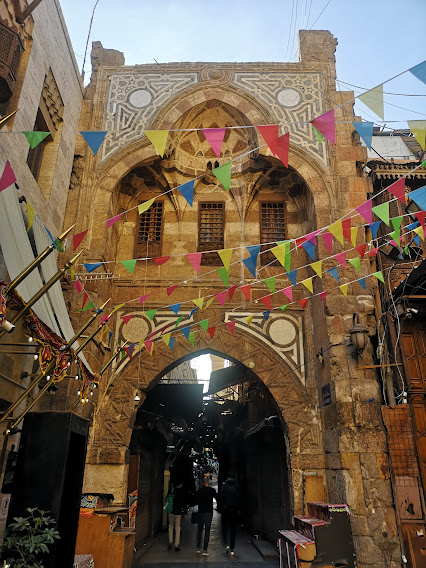

We were also shown the oldest Cafe in Cairo, El Fishawy, which has been serving tea since 1797, the year prior to Napoleon invading Egypt. We didn’t go in, it was early and not much was happening in the area; however, we could only imagine just how busy it was in the height of trading.

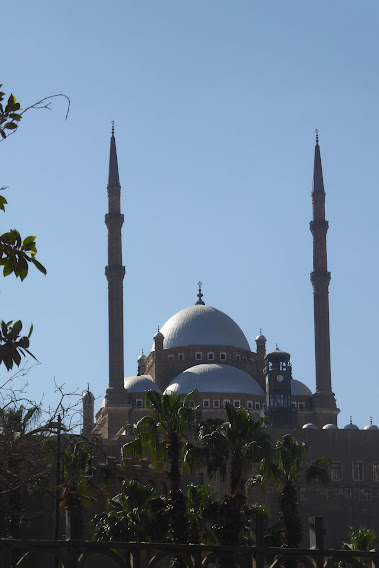
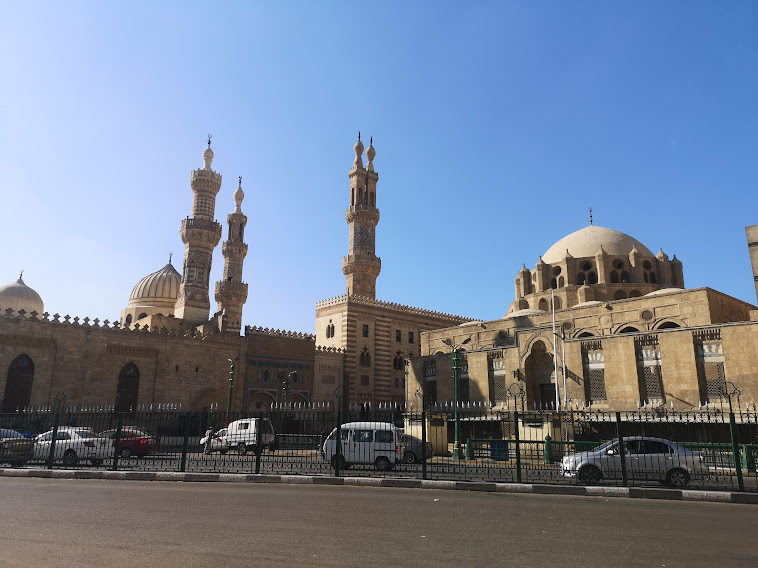
Cairo is known as the city of a thousand minarets with numerous mosques of over 1000 years old. It made sense, therefore, that our next stop was the Masged El Sahel, a traditional mosque where we learned about the religious and cultural heritage of the city from our guide. Also visible was the rather imposing Mosque of Muhammed Ali, built on the summit of a citadel which makes it visible from miles around.

Besides the obvious attractions in Cairo, one of the places we were also quite excited to visit was the Egyptian Museum, which houses one of the world’s largest collections of ancient Egyptian artefacts, including the treasures of King Tutankhamun. We were happy, therefore, to learn this was our next stop!
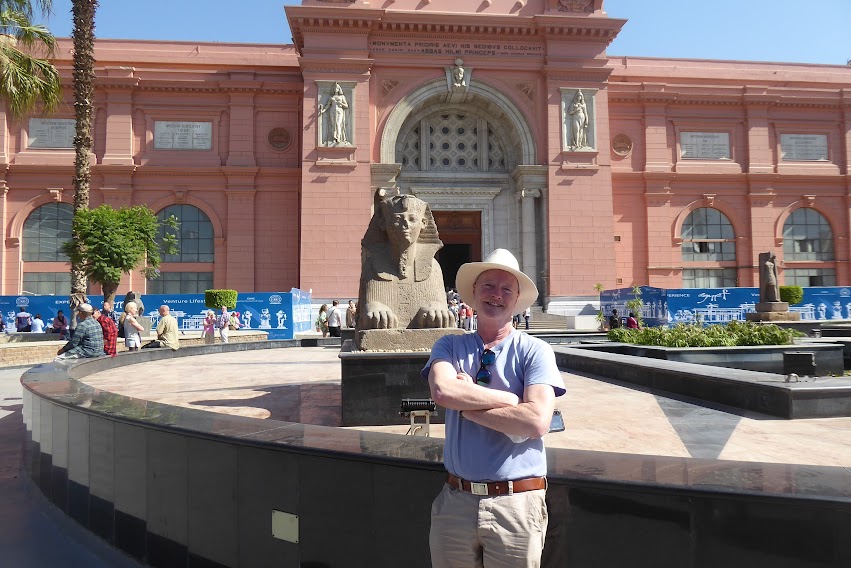
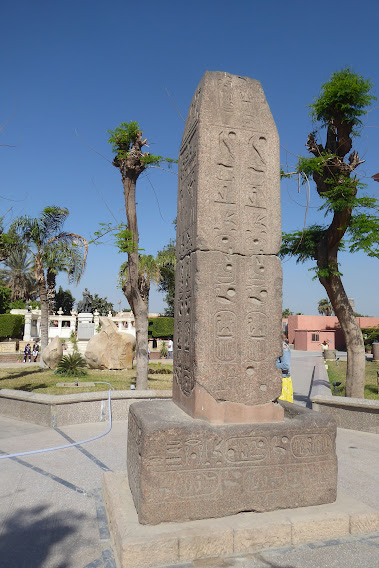
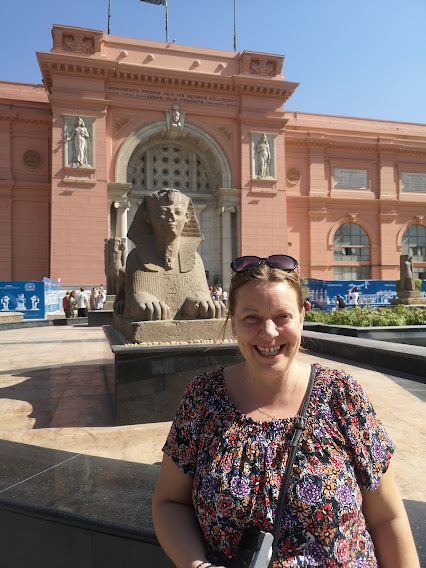
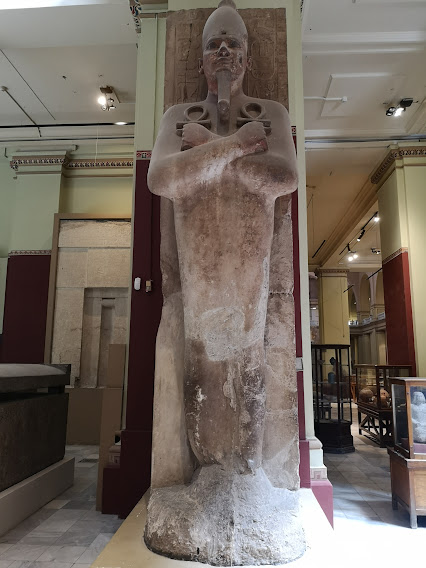
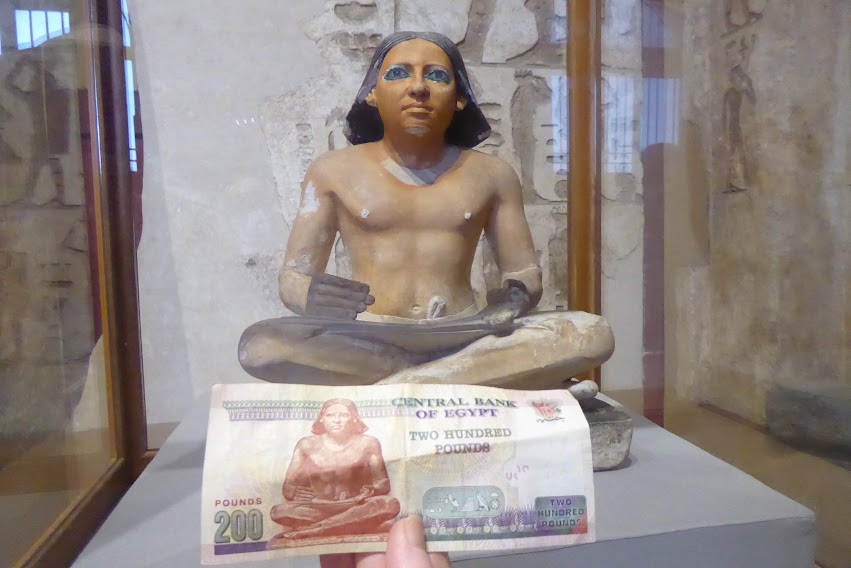
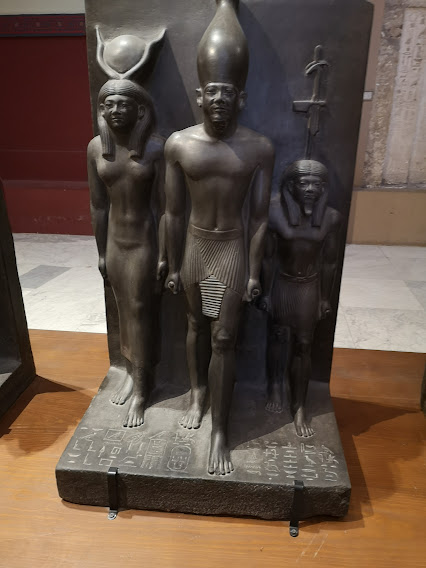
The Egyptian Museum is the oldest archaeological museum in the Middle East and hosts the largest number of pharaonic exhibits in the world. There are more than 100 exhibition galleries and more than 100,000 artefacts. Of course, we weren’t going to see it all in one trip, but we gave it a good go! Entering the ground floor, there was an overwhelming array of statues and artefacts, including the Cairo Scribe, who was unearthed in 1892 and features on the 200 Egyptian pound note. There was also a statue of Menkaure, King of Egypt in the 4th Dynasty, flanked by Gods.

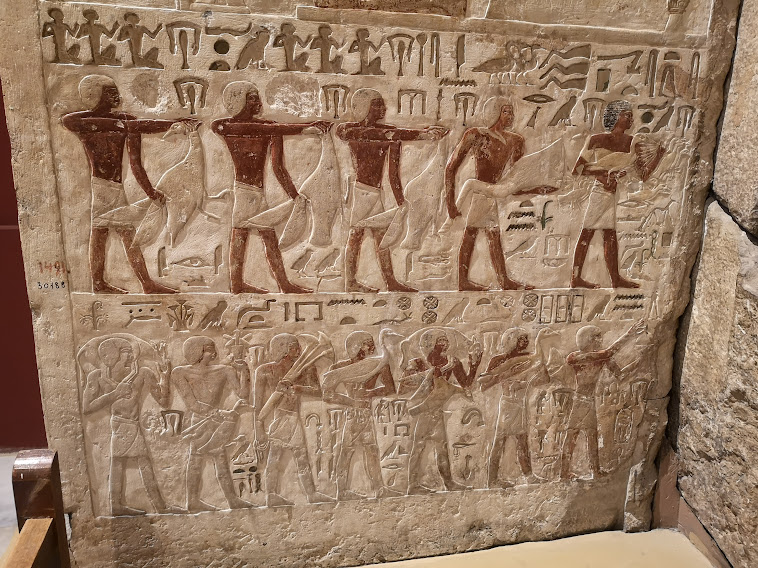
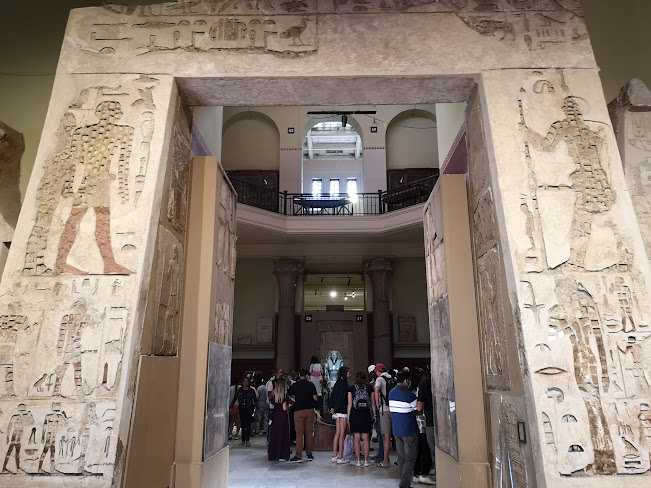
On the Upper floor were the open casket Mummies of Thuya and Yuya, husband and wife, whose tombs were discovered in the Valley of the Kings, but despite graverobbers remained mainly intact.
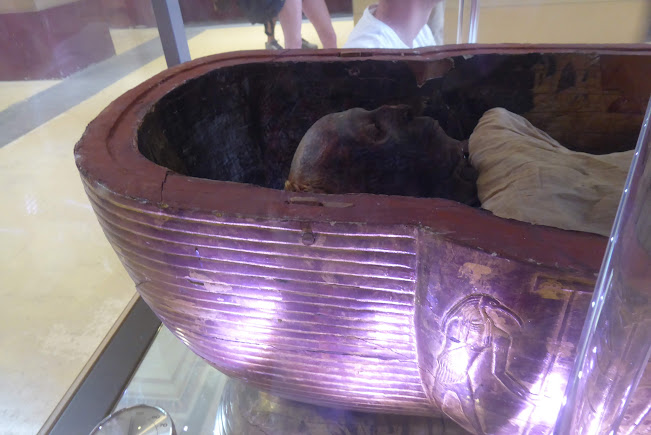
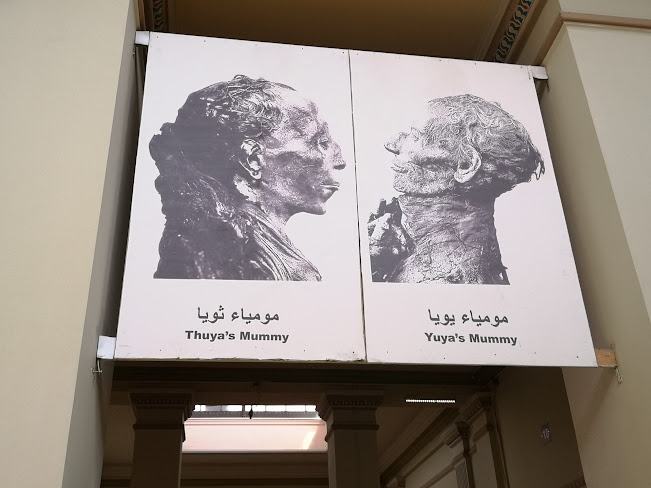
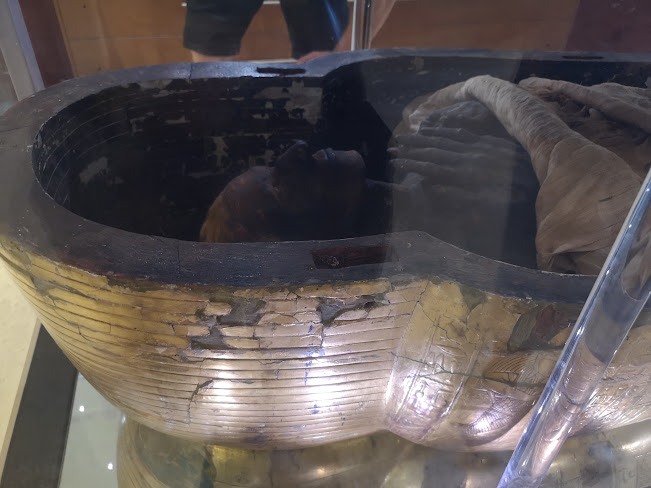
Perhaps the most famous exhibit was Tutankhamen’s Masks and the sarcophagi. We saw his famous gold and blue mask, but sadly were not allowed to photograph it, our sneaky attempt to break the rules being quickly thwarted by security guards. Back down on the ground floor, we saw the Colossal Statue of Amenhotep III and his wife Tiye, flanked by their three daughters. The statue is 7 metres high and 4.4 metres wide and made of limestone. It is thought to be the largest ever dyad carved and was pretty imposing in the central hall. It was time to leave, and we had seen so much, but didn’t have nearly enough time to see everything here. We checked out some mini pyramids on the way out.

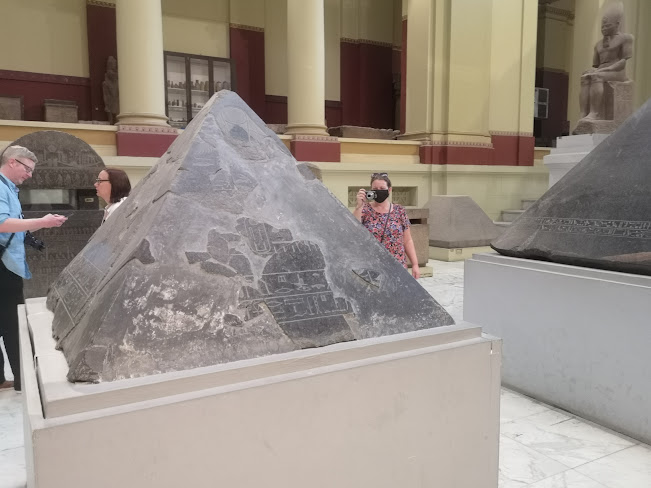

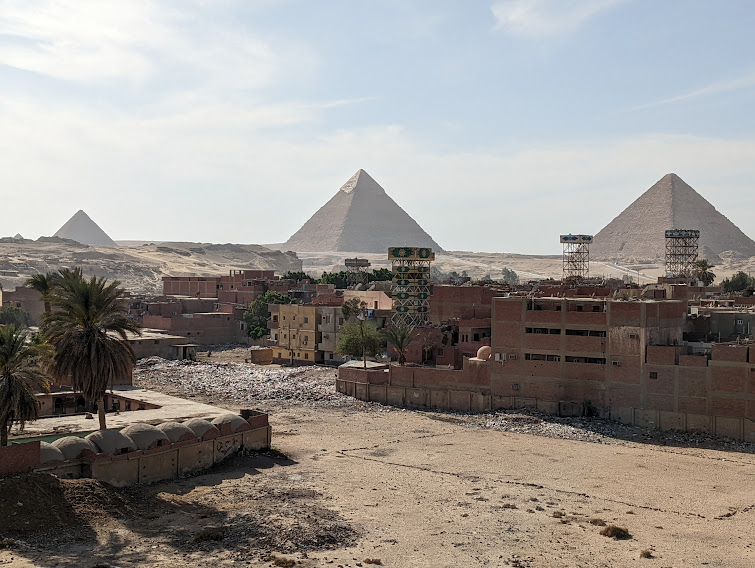
Of course, the main reason to visit Cairo for us was a visit to the Pyramids and the Sphinx, one of the Seven Wonders of the World, and that was our next stop. My Grandfather was stationed out in Cairo with the RAF during the Second World War, and I had grown up seeing a picture of him in front of a pyramid in Cairo, so I was also keen to recreate this photograph two generations later. It took about 50 minutes to drive to the Pyramids of Giza, and it was exciting to finally see them in real life. I had heard lots of negative things about them, such as they are really small and found in the middle of the city and are very underwhelming, but we were impressed! For one thing, we learned the pyramids are much taller than the Statue of Liberty. We went through the ticket entrance, and off we were, free to explore with our guide.
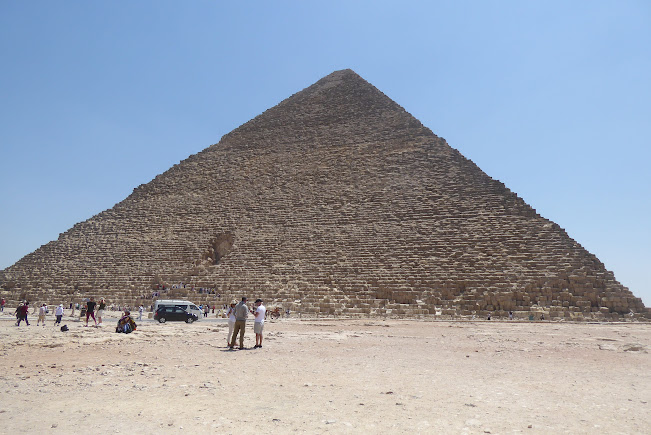
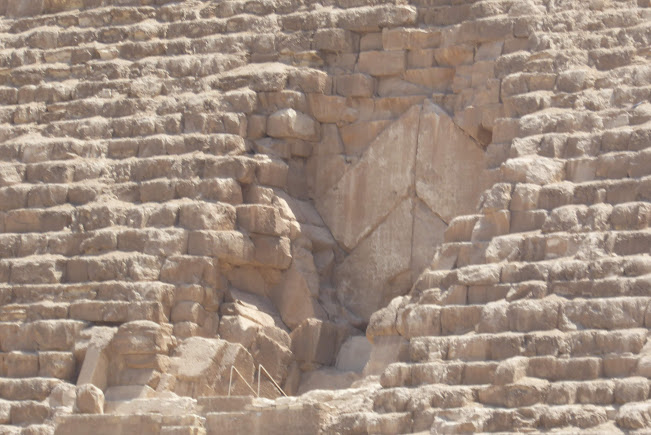
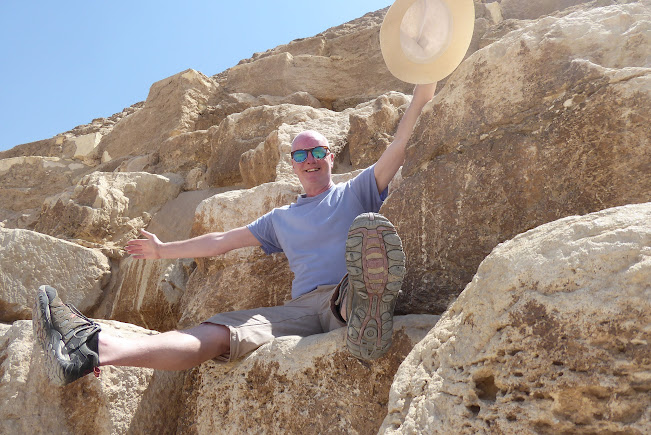

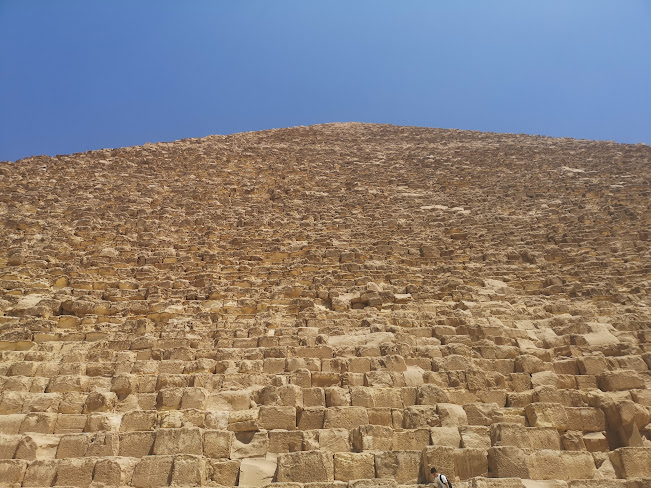
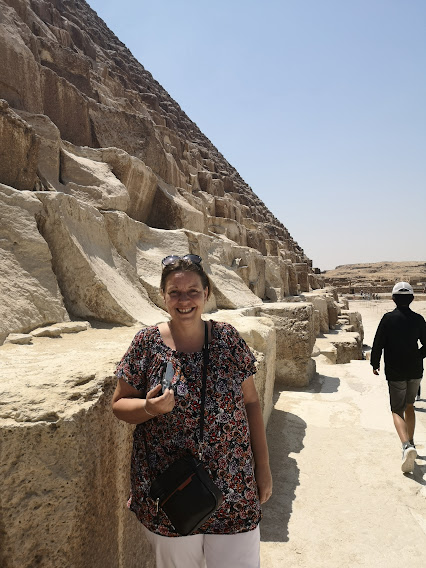
The Great Pyramid is the biggest in Giza and was the tomb of pharaoh Kufhu. As you can see, close up, the pyramid is made of individual stones like a step, and the Great Pyramid took 27 years to build. It was possible to go inside, we didn’t, but instead had some fun climbing in and amongst the stone ‘steps’. We did get pestered by vendors, but one look from our guide and they scuttled away, luckily.
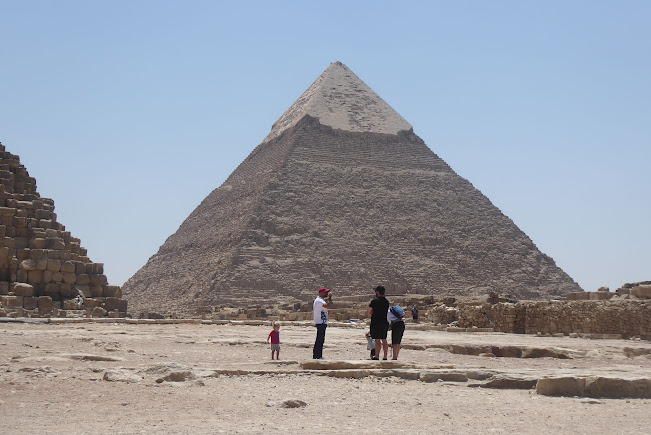
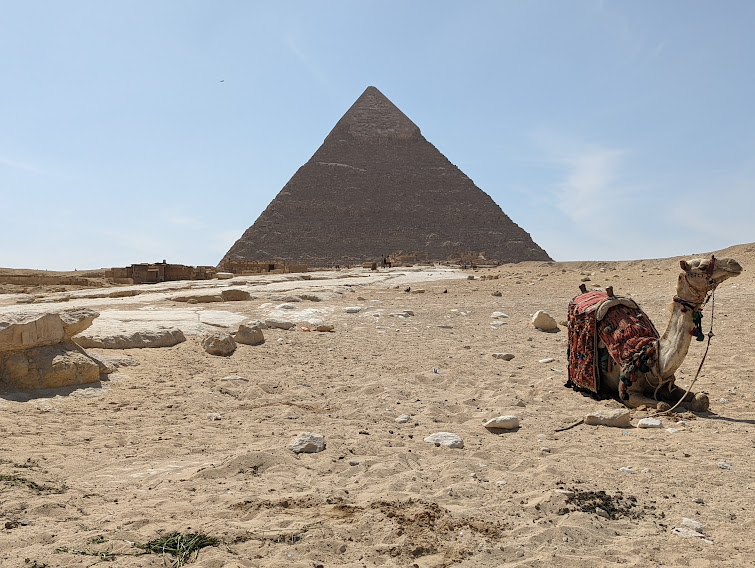
The Pyramid that looks like a Toblerone chocolate is the Pyramid of Khafre, and whilst it looks slightly bigger than Kufhu’s it is because it is on a 10 metre bed of rock. I asked the reason the top was white and was informed that it was because it had kept some of its original white casing at the top, unlike the others.
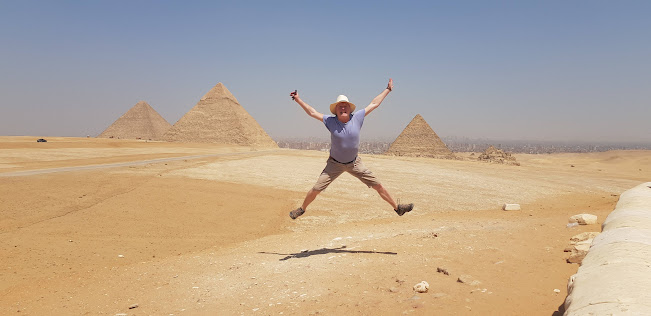
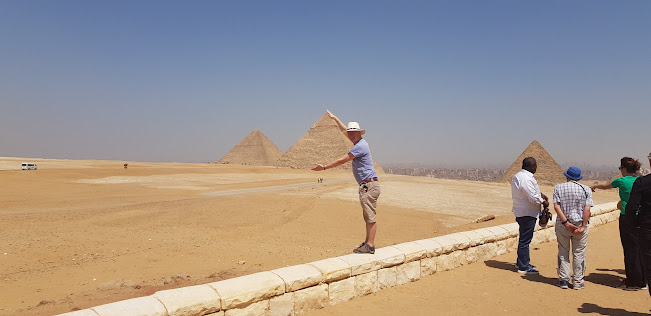
We didn’t get close to the third Pyramid, which belonged to Menkaure and was considerably smaller; instead, we were taken up the road to a popular photo opportunity spot, which we took full advantage of! We were offered a ride on a camel and debated it, but decided against it. It was really, really windy at the time.




We moved on to the Great Sphinx of Giza, a mythical creature with the face of a human and the body of a lion. The Sphinx is unique because it was carved out of one giant piece of limestone, and no one has ever figured out who created it. It was thought to have been painted in bright primary colours, which have worn away, but you can see residue pieces of colour on it. There is a mystery surrounding the lack of a nose on the Sphinx, but it is thought there was one at some point.

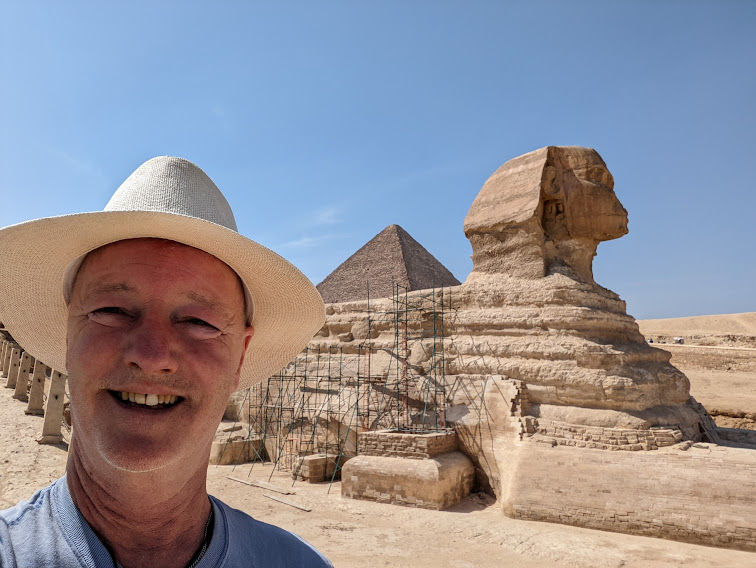
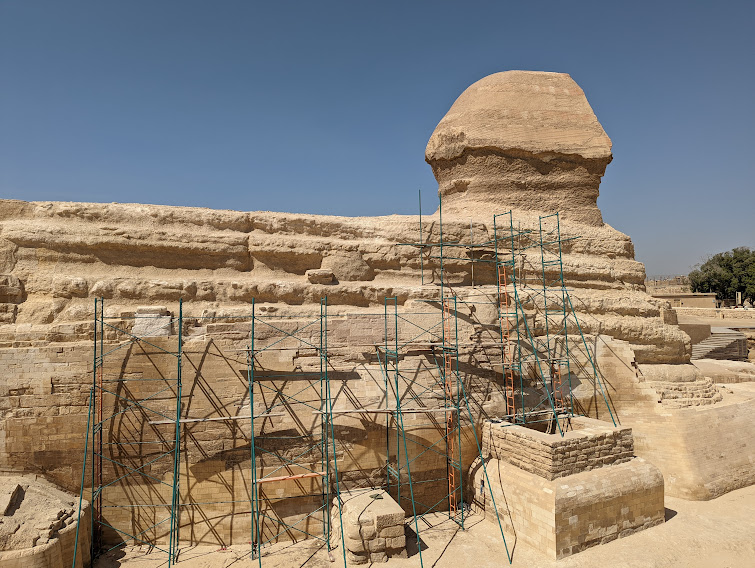
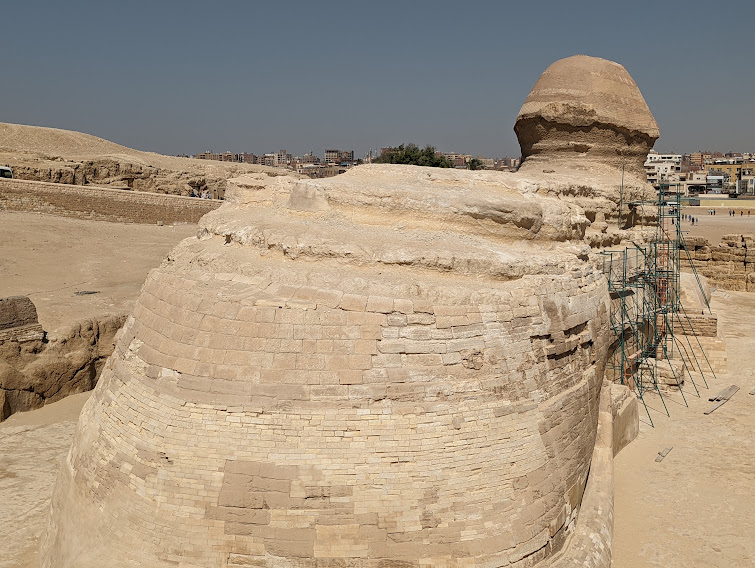
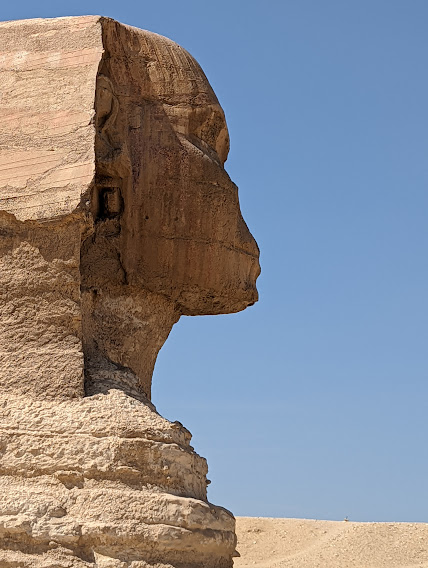

One of the guides told a popular angle to photograph The Sphinx from, and if a pair of sunglasses was held in the right place, it would appear as if the Sphinx was wearing them. We didn’t quite get it right, but you can get the gist!

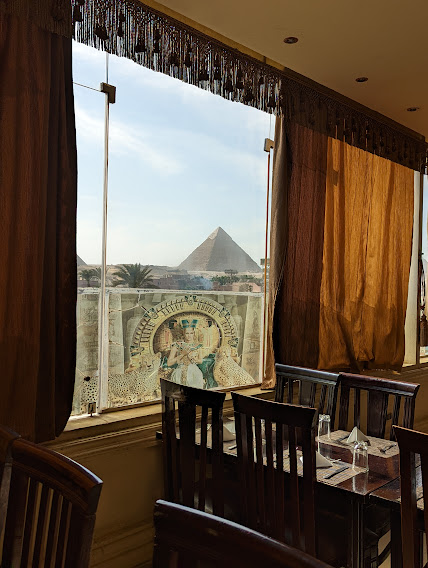
Our day ended with a delicious dinner at Queen Cleopatra Restaurant, which offered a range of authentic Egyptian dishes. Fun fact about Cleopatra: she was born 2,500 years after the Great Pyramid at Giza was built, and 2,000 years before the first lunar landing. That means that Cleopatra was closer to our present time than to the times of Ancient Egypt‘s early dynastic past. The history in Egypt goes back a very, very long way!
Our flight back to Hurghada marked the end of a very long but fantastic day in Cairo, filled with history, culture, and good food!
Carol & Nigel xx
April 2022

This article is also featured on GPSmyCity. To download this article for offline reading or create a self-guided walking tour to visit the attractions highlighted in this article, go to Walking Tours and Articles in Cairo.
